




Afterword
I joined the crew of my first tall ship at seventeen. I know more than most the temptation to cast a vessel as the hero of the story, but it’s a lie. We name them, adorn them, and rely on them, but ultimately ships are tools enlivened by the people who use them. They encompass exploration and cultural exchange, escape and immigration, enslavement and genocide. Rather than flattening the ship into a hero, I want to examine the ship as a vessel in every sense of the word, one brimming with discoveries and losses alike.
In her essay The Carrier Bag Theory of Fiction, Ursula K. Le Guin invites us to explore the implication of the container as the oldest human invention. What would it mean to acknowledge that we have carried sustenance and stories in baskets, nets, and bottles for far longer than we have centered narratives around a Hero’s Journey built on aggression and conquest? “It’s hard,” she admits, “to tell a really gripping tale of how I wrested a wild-oat seed from its husk, and then another, and then another, and then another, and then another—” but the essay encourages us to try.
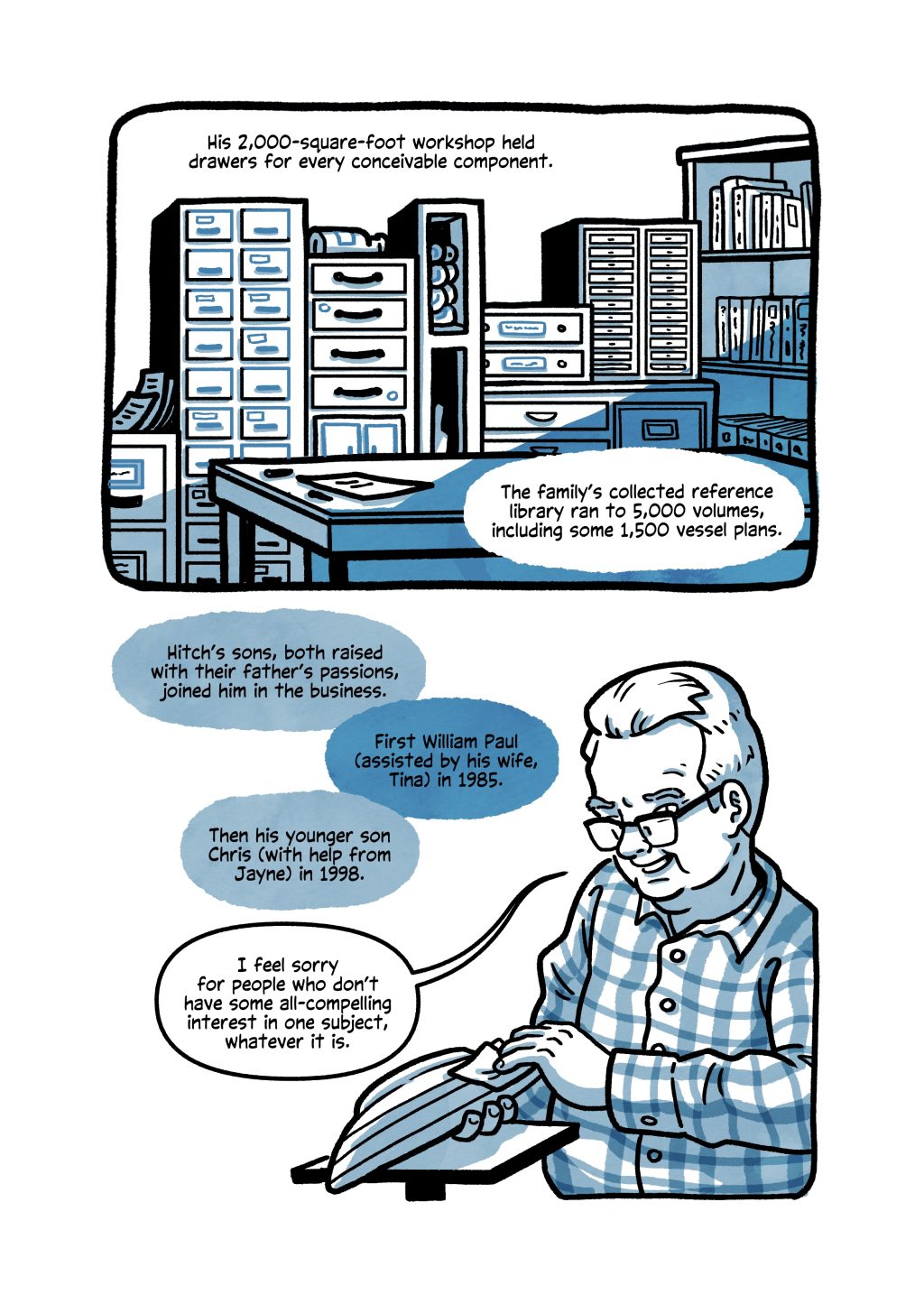
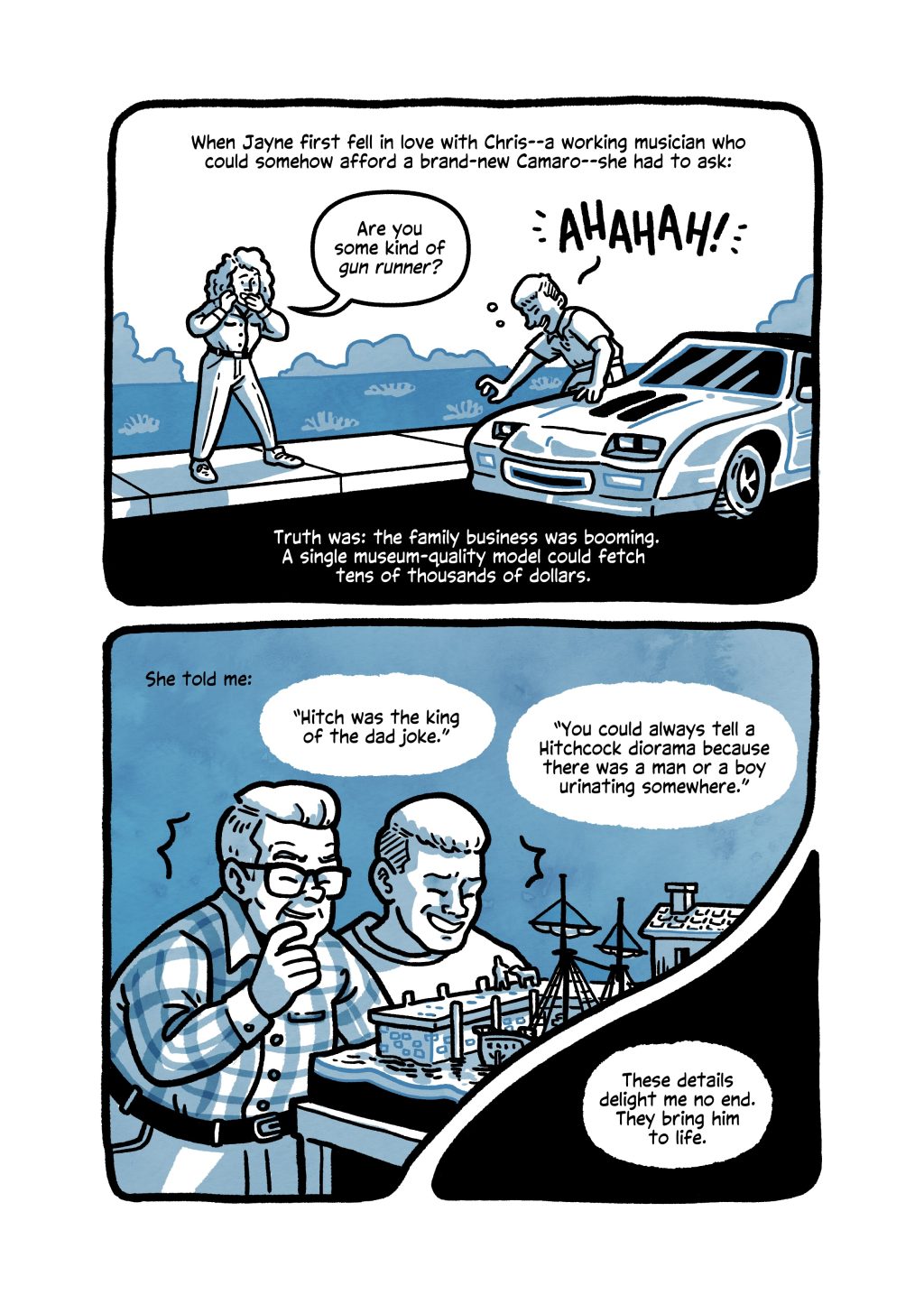
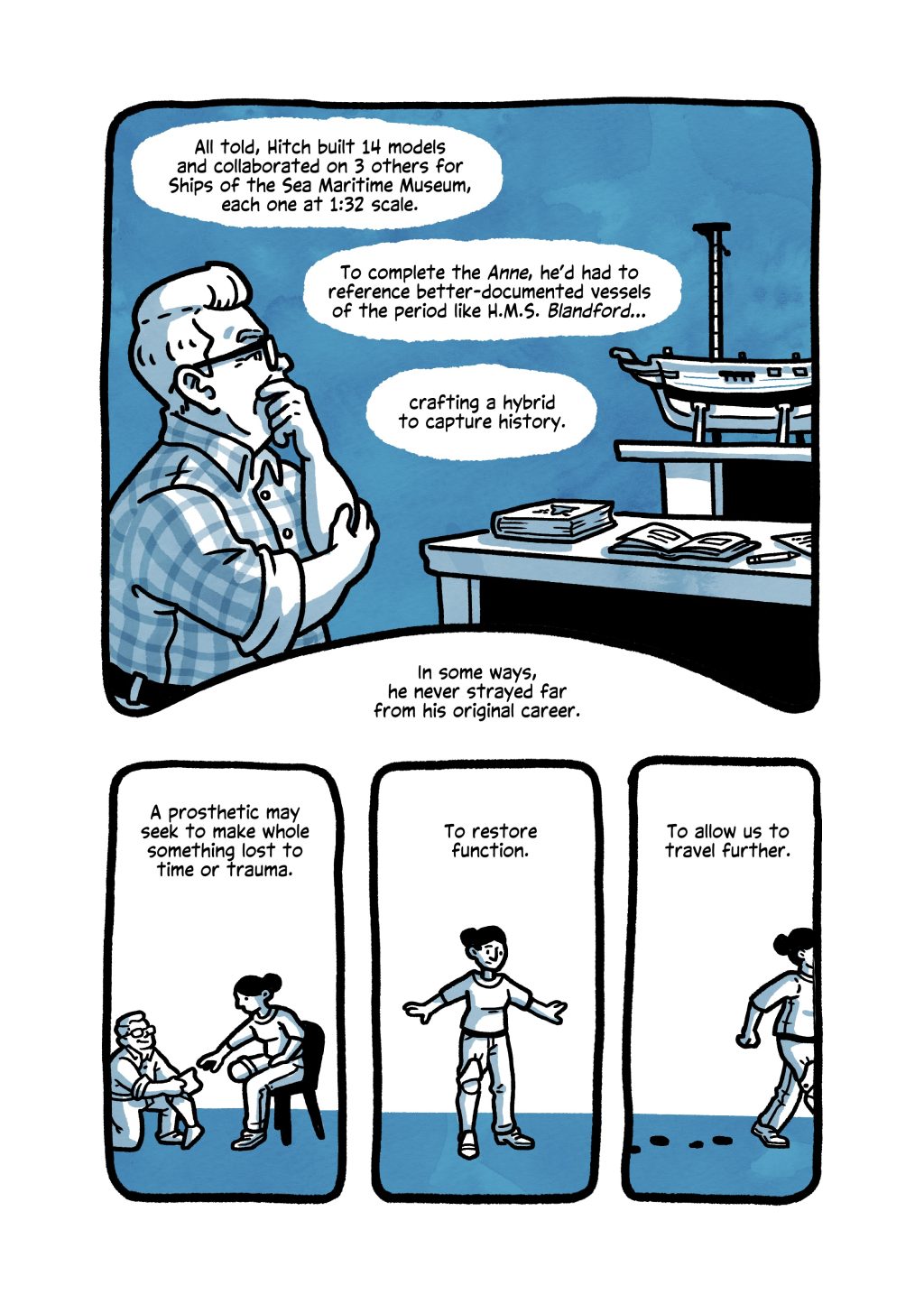
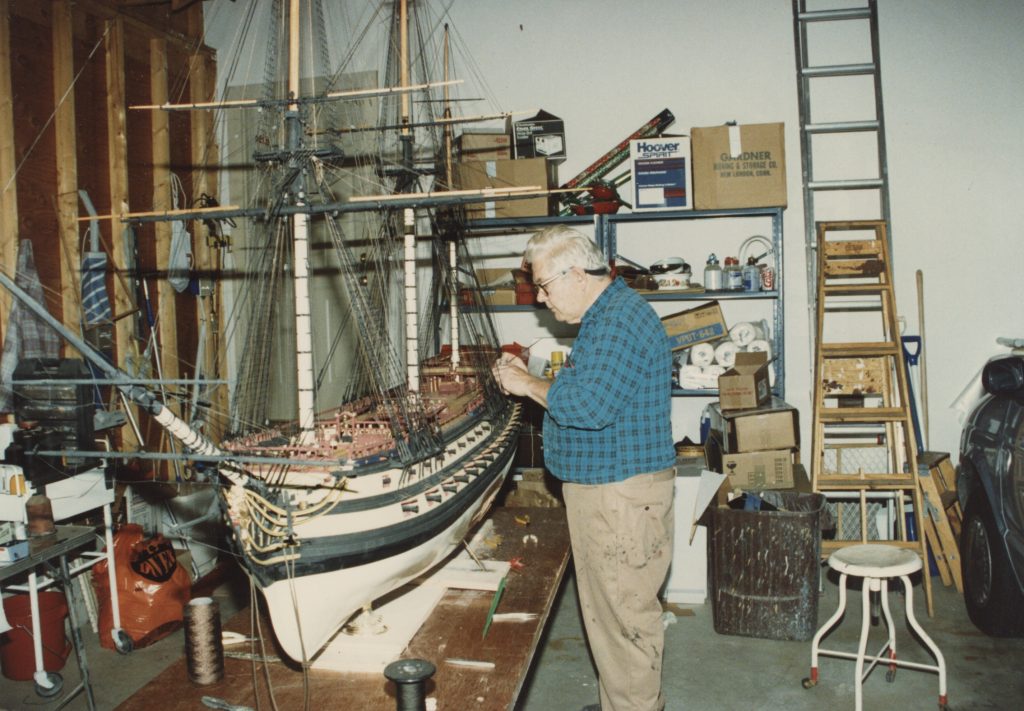
Whether framing the hull of a ship or the panels of a story, we delineate the things we love. It is an affection that cannot be rushed. I was lucky enough to learn from many model ship builders in the course of creating this piece. Their generosity, enthusiasm, and expertise helped me appreciate what’s poured into each miniature vessel, and to recall something I need to keep close in my own practice: there is value in doing things that
defy efficiency. These are fields where monotony walks hand in hand with craft. Some people throw their hands up and bemoan the death of such practices in the age of AI, but I believe we’re headed toward a resurgence in valuing the things machines cannot do.
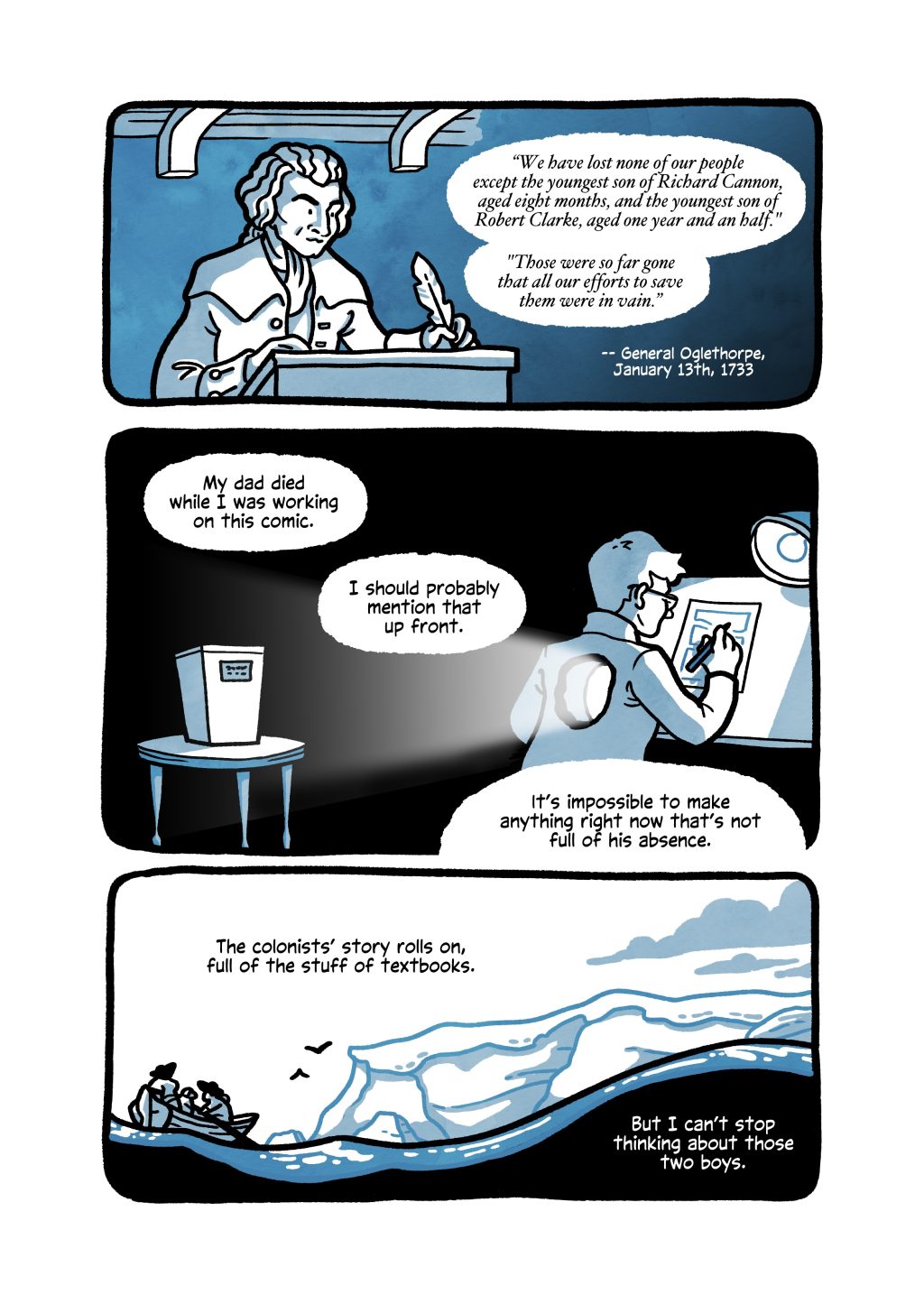
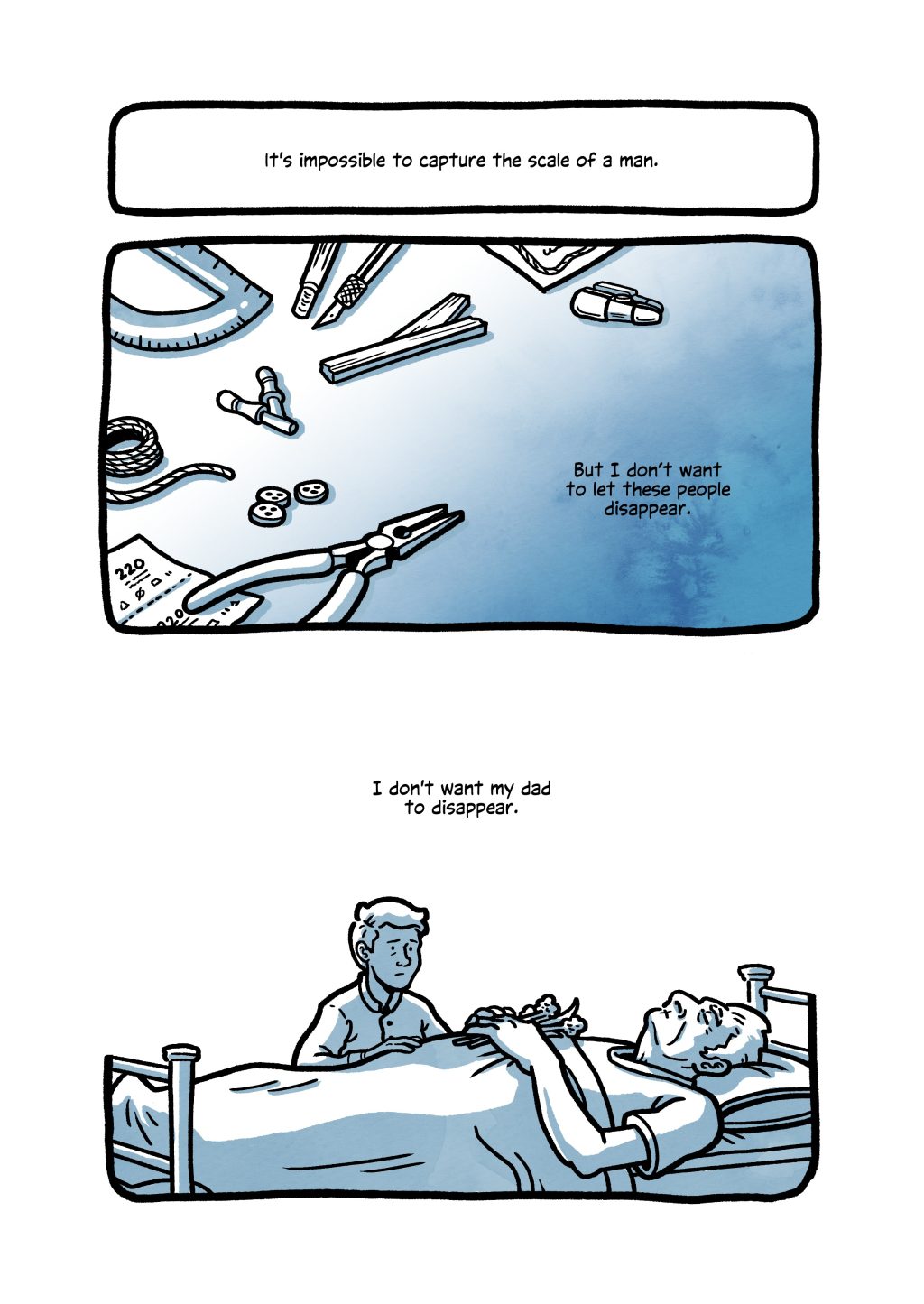
There is nothing more human than dying. Steeped in my own grief at the loss of my father, I found my way into a story that took me places I couldn’t have foreseen. Early in the research process, I read that the colonists aboard the Anne slept below decks in suspended wooden cots—their similarity to coffins a reminder of how often such voyages become a passage to the underworld. Every journey requires a type of death. We leave behind our former selves, hoping to meet some new incarnation on the farther shore, but the past always comes with us in one guise or another.
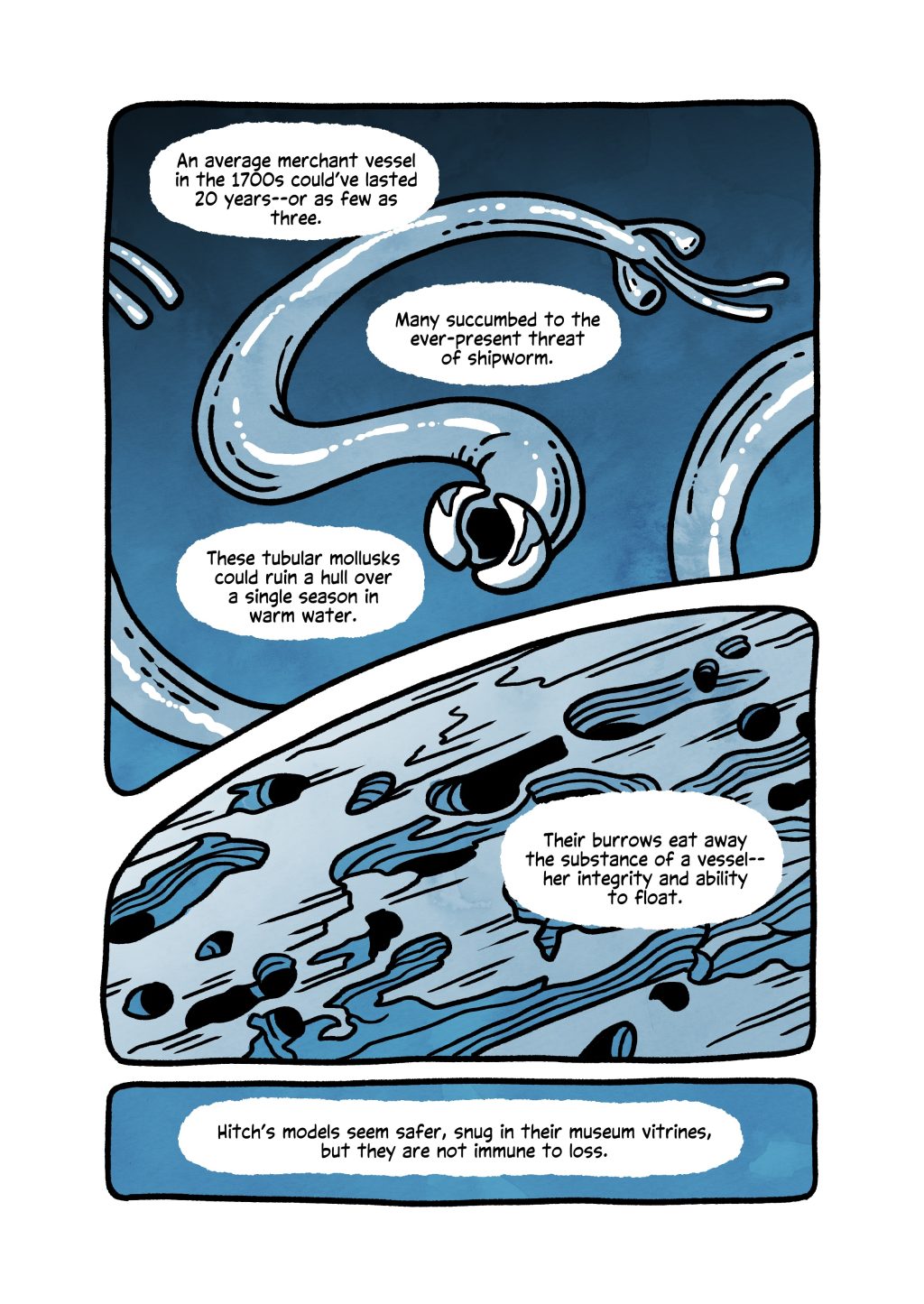
We don’t know what became of the Anne in the end; her own death, whatever that means for a vessel, went undocumented. Sometimes such losses are inevitable. But the containers we build, whether they be ships, comics, or museums, offer us a chance to see ourselves woven into the minutiae of the past. It is a form of immortality, one that relies on engagement, imagination, and tenderness, and it is always worth reaching for.