
Reviews
-

The Art of Attention: Jill Christman’s If This Were Fiction: A Love Story in Essays
“If you really want to look at someone, then your only option is to look at yourself, squarely and deeply.”
-
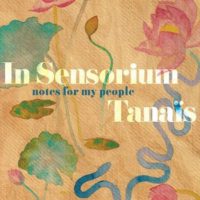
When Writing about Pain is Political: In Sensorium by Tanaïs
In In Sensorium . . . Tanaïs inhabits their pain fully and seeks new ways to describe and transcend it through scent, rather than just words.
-
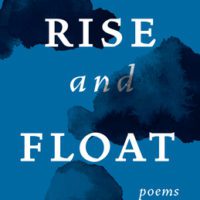
Revising Time: Nonlinear Memory in Brian Tierney’s Rise and Float
I’m getting too close to the poems, but Tierney’s collection demands a closeness.
-

Indiana Anomie: Budi Darma’s People from Bloomington
a portrait of the American tendency to keep the suffering of others at arm’s length as if misfortune were contagious, or to ruthlessly eliminate it entirely
-
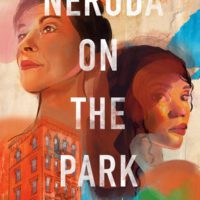
The Verdant Heart of a Mythic Neighborhood: Cleyvis Natera’s Neruda on the Park
In Natera’s masterful debut novel, a simple New York City park becomes the verdant heart of a mythic neighborhood, where fire escapes are like golden staircases and the community goodwill of friends and neighbors becomes a nurturing flame that sustains…
-
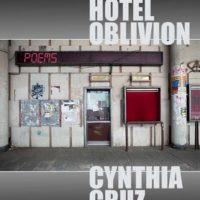
Not One Thing, But Many: A Review of Cynthia Cruz’s Hotel Oblivion
How would that candy taste in my mouth? How would that blue chiffon offset my dark hair and plain features? How would the world look to me through the eyes of this woman and this one and this one? What…
-

Survival and Hope: Akwaeke Emezi’s You Made a Fool of Death with Your Beauty
You Made A Fool organically makes the argument that friendships can be just as important and fulfilling as romantic relationships.
-

History Is Fluid: R.F. Kuang’s Babel
In Babel, language is a resource stolen from the mouths of native speakers.
-
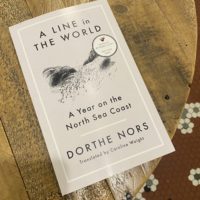
Sketch Book Reviews: A Line in the World by Dorthe Nors
While this book is about a tiny part of the world, it’s universal in its particularity—a must-read for anyone who loves lyric essays.
-

Daydreams of Blackness: Some of Them Will Carry Me by Giada Scodellaro
Scodellaro’s characters have autonomy, know their comforts and desires, and find space and safety in the corners of forgotten places. They grieve on countertops, chewing ice and waiting for the return of a lover who has left for another.
-

Far from Usual and Better for It: The Layered Poetics of Allison Blevins’s Slowly/Suddenly
Slowly/Suddenly is presented as a diptych in the Table of Contents, perhaps mirroring Blevins’s commitments to other forms of art, but her poems’ progression from Part I to Part II is not a linear narrative, not a Before & After.
-

Take a Good Look: Lisa Taddeo’s Ghost Lover
“Crystal” was really her name. She was always as gentle as she could be. I am grateful to her for that.