
Reviews
-
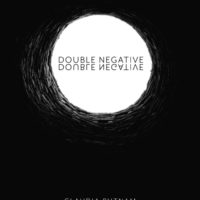
Learning from Grief: Claudia Putnam’s Double Negative
Among the meanings of Claudia Putnam’s cryptic title is a mathematical one, based on the lower left quadrant of graphs; it is a meaning that she chooses, explicates, and explores from many angles. But negative infinity is much harder to…
-
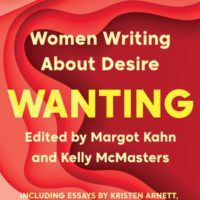
Insatiable Hunger: Wanting, edited by Margot Kahn and Kelly McMasters
If I could not morph into a rescue dog doted on by childless lesbians, at least I could luxuriate in this anthology.
-
A Worn Violence: On Gabrielle Bates’ Judas Goat
[T]here is a speaker who will simply persevere, who will, like “the heart trying to leave the chest,” keep going, and by keeping going, will tend always, though it’s sometimes hard, toward human connection. Toward love.
-

The View from the Backstretch: Kathryn Scanlan’s Kick the Latch
Though this account is full of wounds, losses, and hardships, the Sonia who emerges herein speaks of them with the kind of sinewy, bracing directness you would expect of a complete stranger sitting across from you at the bar.
-

Seas of Discourse: Zülfü Livaneli’s The Fisherman and His Son
people do not fight their battles in isolation between mountains of seawater or in a vacuum of hypermasculine idealism; they suffer together and sometimes apart with a thin connective tissue strung between them.
-

Yearning and Wandering: Tiff Dressen’s Of Mineral
The earth is fertile ground for seeking one’s roots and connection to others.
-
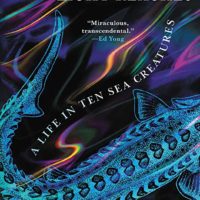
Queer Revisioning and Incomprehensibility: Sabrina Imbler’s How Far the Light Reaches
Imbler never fails to demonstrate that a different way of life is possible.
-

It’s Not Cancel Culture, It’s Scam Culture: Jinwoo Chong’s Flux
“Can we separate the art from the artist?” If you’re like me, you’ve been in more than a few versions of this particular conversation. You could even, at this point in the post-MeToo era, write a MadLib of this conversation.…
-
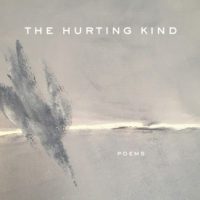
Clearing the Bar with Care and Complexity: Ada Limón’s The Hurting Kind
The Hurting Kind’s epigraph, a quote from Argentine poet Alejandra Pizarnik [implores] us to “Sing as if nothing were wrong. / Nothing is wrong.” When we read Limón, we can almost believe that.
-
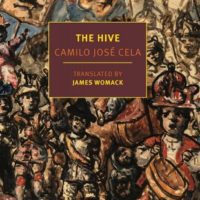
Languages Within A Language: Camilo José Cela’s The Hive
How do you represent, in a different tongue, the languages within the language of the original text?
-

Holding On and Letting Go: Rebecca Aronson’s Anchor
Gravity is what tethers us to the earth and to those we love, but it is also what we are constantly trying to escape. Anchor is about both these states—the holding on and the letting go—and the tension between them.