
Rumpus Originals
-

A rush of joy from complete strangers: An interview with Monica Macansantos
I think that it’s helpful to imagine your own people as your primary audience even when you are also writing for an audience that doesn’t necessarily belong to this community.
-
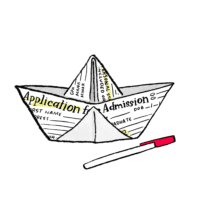
Funny Women: Personal Statement for Creative Writing MFA Applications
Dear MFA Faculty at Private University,
-

Rumpus Original Poetry: 3 Poems by Katie Farris
Why bother closing a door / when everyone demands it open?
-
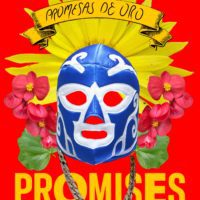
RUMPUS POETRY BOOK CLUB EXCERPT: UPWARD MOBILITY by José Olivarez
An excerpt from The Rumpus Poetry Book Club’s February selection, PROMISES OF GOLD by José Olivarez
-

The Most-Read Essays of 2022
Essays are all about reflection, and we thought we’d kick off 2023 with a look at the most-read pieces of last year. It can sometimes feel like hours (years) of hard work disappear into the maw of our short attention…
-
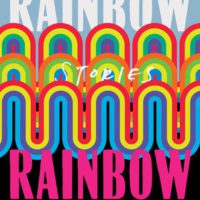
What Is a Person?: Lydia Conklin’s Rainbow Rainbow
Safety requires setting up clear boundaries, but a restricted life is lonely and isolating and often impossible to bear.
-
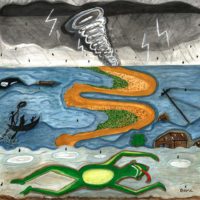
From the Archive: Rumpus Original Fiction: Three Flash Fictions by Niyah Morris
The lasso was a gaping mouth that opened wide enough, we hoped, to swallow the cloud.
-

Pinning myself like a butterfly onto the page: A Conversation with Kimberly Nguyen
I imagined myself as a lone satellite floating in outer space trying to reach earth.
-

Voices on Addiction: There is No Escape
. . .this house is not the right place for children either and yet, here you are day after day.
-

The Sense of Words: Reverse Engineer by Kate Colby
. . . language is duplicitous. To be broken is perhaps to be part of a process (or a metaphor for life), where to bend (and survive) also leads to being broken. In this context, the word “broken” in “Reverse…
-

Telling our necessary truths: A Conversation with Janet Rodriguez
Only after this memoir was I able to see the Kafka truth: We are telling our necessary truths. We are the necessary heroes of our own narratives. Somewhere inside all of it, there is a collective truth, one we can…