
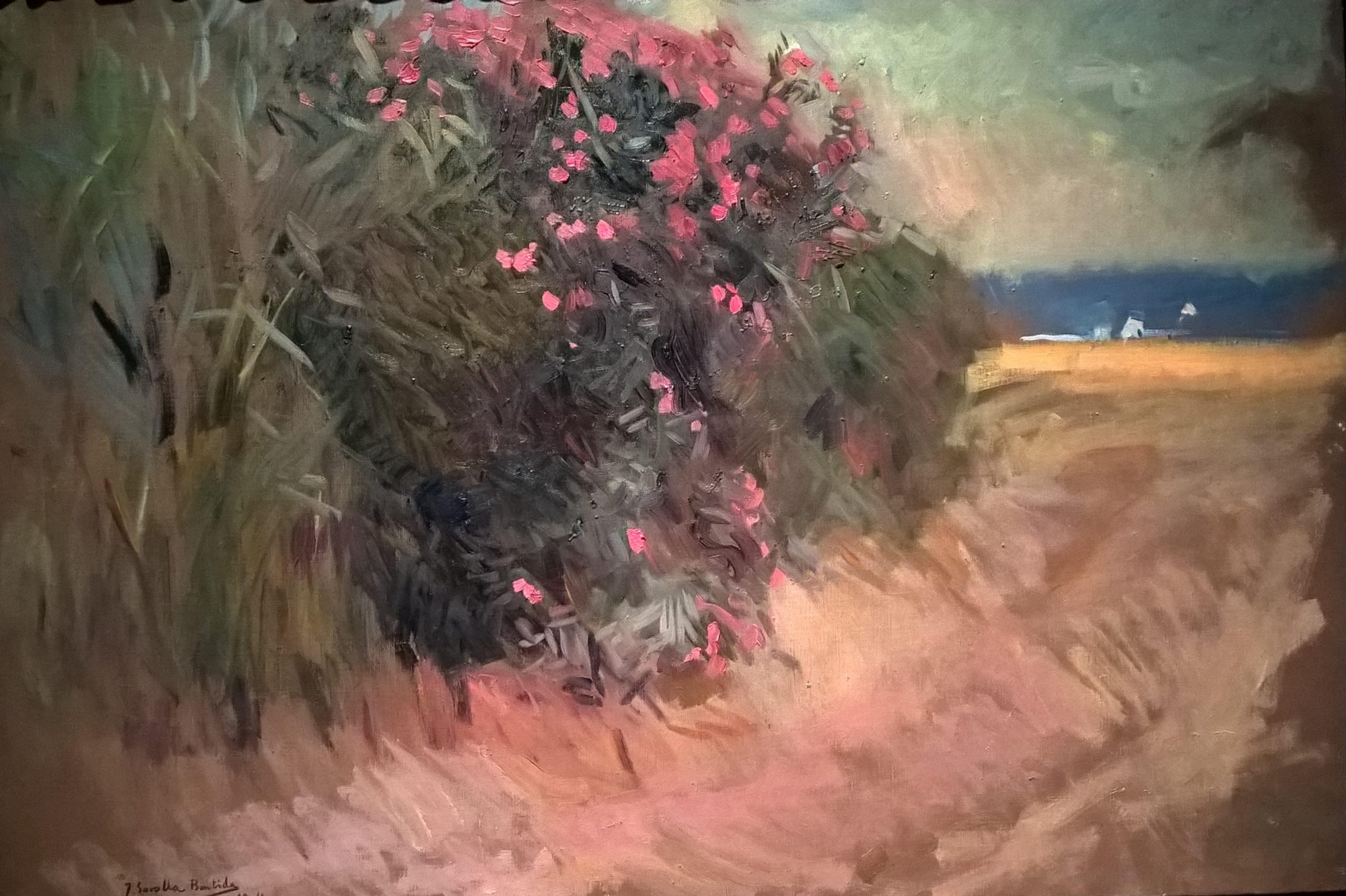
It is July as I write this, and July is a hot and hard place; the garden is beginning to explode with vegetables and herbs, and yesterday, we gave the perennial beds their first chop of the season to inspire more late-summer growth. Last night, when Susan came in from walking the dog, she said the bats and fireflies were out. It was the first time she’d seen them this year. Bats and fireflies today; rose-eating Japanese beetles tomorrow. July is beauty and loss, contentment and sorrow.
“A light here requires a shadow there,” says Mrs. Ramsay in To the Lighthouse.
* * *
On a hot July day, many years ago, friends and I walked from Gonville & Caius College in Cambridge, where we were studying, to the tiny village of Grantchester, a few miles away. Some of us were Americans, unaccustomed to the idea of open access land and the right to roam, so it felt like a violation to stroll down a country lane toward an overgrown path accessible only by opening a gate meant to keep grazing sheep and cows from roving beyond the boundaries of someone else’s property. I looked around for the “No Trespassing” signs that I was used to seeing in rural places where I had spent previous summers; in Pennsylvania and upstate New York, no one hesitated to warn walkers with signs that often included the image of a gun or a bullseye. But this was different: Open access land made our walks a full sensory experience in a beautiful and peaceful place, with hills and ponds and wild perennials around every corner.
It was 1983, during the disastrous Thatcher administration, when it seemed like every second person was out of work; it was during The Troubles, which felt endless and hopeless; but where I was that day in July, it might as easily have been 1920, in a scene lifted from J. L. Carr’s A Month in the Country, in which a World War I veteran reenters daily life by taking on a job restoring a medieval mural in a small North Yorkshire village church. The story represents the purest and most unsentimental evocation of hope: War begets beauty which heals sorrow.
The extent to which the human heart seeks to create splendor in a place of certain doom cannot be hyperbolized. During the Battle of the Somme, in which there were more than a million casualties, British soldiers planted trench gardens. In horticultural therapist Sue Stuart-Smith’s The Well-Gardened Mind, she writes about officer Alexander Douglas Gillespie, who
“created a garden by transplanting sweet violets he found growing on the bank of an old flooded trench.… He asked his parents to send out nasturtium seeds and sowed them under cover of darkness in late March, and in early summer he wrote of sowing marigolds, poppies.… Gillespie wrote of ‘wearing respirators round our necks, and watching the wind, in case the gas should come drifting down.… The gardens are all flourishing—lily of the valley, pansies, forget-me-nots, and all the old favourites. We are kept busy watering them.’”
My friends and I walked to Grantchester through the fields, surrounded by shoulder-height wild foxglove and yarrow, Queen Anne’s lace and meadow buttercup. There were no cars; just the sizzle of crickets. Most of us were hungover from too much cider at a Cambridge pub the night before, so we moved in slow motion, like we were swimming through pudding. We ambled along, inhaling the not-unpleasant combination of grass and sweet pea and cow manure. I distinctly recall wondering why I had thought it was necessary to drink too much the night before, and how inebriation can skew one’s perception of beauty. What was the point of it? What function did it serve? Beyond the fact that I was twenty, and this is the type of thing that twenty-year-olds do the first time they are overseas unaccompanied, there was no particular reason for it—no celebration, no special occasion, no anguish.
It had been a very hot summer like the one we’re in now, and the sun beat down hard on me as we walked from Cambridge to Grantchester. When we finally arrived at The Red Lion, our destination, we ate cold Scotch eggs and drank warm lager at picnic tables, despite our hangovers; we stretched out in the grass, napped until late afternoon, and headed back through the overgrown path, opening and closing the gate behind us. We made it back to Caius in time for cocktails at The Buttery, the college pub. This was as much stress as there was in our lives on that specific sliver of a hot July day, where we could doze in the grass, drink without fear of reprimand or label, sleep with the compelling person we just met, walk through a stranger’s fields and scratch the ears of their sheep without risking arrest. These were the before times: just before AIDS, long before constant digital connection, very long before the vague moments when I began to question my attachment to the edge-dulling effects of too much cider and wonder why I would ever think that a long walk through fields of wildflowers could be improved upon with a hangover.
July is also a turning point, a cusp. There is already a barely detectable edge to the warm breeze, and in New England, you can begin to smell the taint of dying leaves. I recognize the season changing the minute the blue flowers on the nepeta begin to fade and turn gray; when that happens, I take my pruners and reduce the plants in height by half. One afternoon, I’m sitting on the front porch watching the bees frantically drink the nepeta nectar, and the next morning the blossoms are spent, and with them, the insects, who have moved on to the echinacea and the fuchsia foxglove trumpets that remain.
* * *
In July of 2008, my cousin, the musician and composer Harris Wulfson, attended my civil union in the backyard of the home I share with my wife; his thirty-fourth birthday was days away. Less than a week after that, he took his own life by joining a group of visitors leaving the lockdown unit of a facility in Manhattan where he was being treated for schizophrenia; there was a train involved. Eighteen years later, Susan will kidnap me for my late June birthday, my sixty-third, and take me to Maine so I can stand in the salt water, which is my personal tradition. We visit the botanical gardens in Boothbay and walk the five miles of woodland and shoreline paths. In two weeks, less than six miles from the tourist-thronged white beaches of Fortunes Rocks near Biddeford, where babies in diapers sleep on blankets, slathered in sunblock, and the East Point Audubon Sanctuary, where black-capped chickadees, gray catbirds, and ruby-throated hummingbirds nest in the summer, a doe-eyed twenty-six-year-old Colombian man on his way to work will be murdered by immigration agents in his car in which his little girl, still in her Bluey pajamas, is sitting. Dragged out, dead, he will be handcuffed and left on the ground for five hours. I listen to the news and watch the video and wonder: As her father was taking his last breath, did his small child smell the sea air and the cotton candy? Will this conflation be the synesthetic memory that plagues her for the rest of her life, and that she will never understand? A hot July day at the beach (perhaps with her own children and grandchildren for whom she has bought soft serve) will always leave her with gripping sadness, and she’ll never know why.
* * *
We plant gardens on the banks of trenches, tending muddy flowerbeds we may never see blossom. We load our babies into the car to drop them off at daycare on our way to work in a beach town, and never get there. A cousin will slice our wedding cake and be gone a week later. Bats and fireflies today; Japanese beetles tomorrow. A perennial garden thick with mid-season coneflower and astilbe, and stunning digitalis with deadly poison; a battle that will take down an entire generation of boys among the nasturtiums and sweet violets that will continue to grow despite the gas. “A light here requires a shadow there.”
“It takes devastation to find hope,” writes Nick Cave, visiting Nîmes with his wife on July 14th, the anniversary of his young son’s death. “These feelings of loss drift through our bodies like ghosts. They settle in our cells, in our blood, gathering around days like this like weather patterns, shaping us in ways we cannot understand. It is a sad day,” he writes. “I can see it in my wife’s eyes. But it is an ordinary day too, a beautiful day. The best day. Susie is already at the window, pulling back the curtain, looking over the town, the sun shining on her face.”



One response
This is so beautiful and feels like a hazy slow summer afternoon. “July is also a turning point, a cusp” is my writing prompt for this morning, the last day of July.
Click here to subscribe today and leave your comment, or log in if you’re already a paid subscriber.