Posts by author
Kathleen Alcott
12 posts
Kathleen Alcott’s first words were “Ooh, the lights,” and they will probably be her last. Her debut novel, The Dangers of Proximal Alphabets, is forthcoming from Other Press in September of 2012. She came of age in Northern California, studied in Southern California, fell in love with San Francisco, hid for a while in Arkansas, and presently resides in Brooklyn. Her work appears or is forthcoming in The Rumpus, Slice Magazine, American Short Fiction, Rumpus Women Vol. 1, and The Bold Italic. A copywriter by day, she is currently at work on her second novel, a book that traces the lives of four tenants of an apartment building in New York City and their rapidly deteriorating landlord. Excerpts and thoughts at kathleenalcott.com.
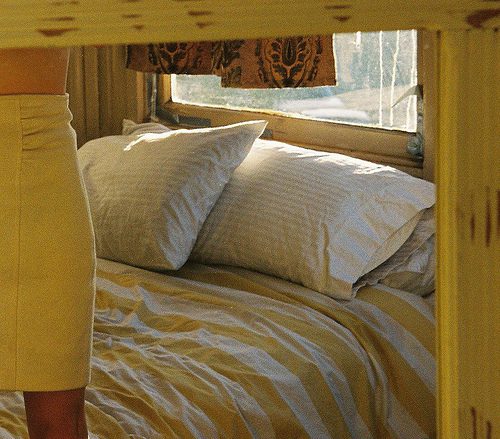
Where I Write #8: The Strange Nooks of Our Bodies
Behind me there’s a bed that hasn’t seen anyone but myself since I purchased it four months ago when I moved across the country, and I make it every morning.
FUNNY WOMEN #35: A Southern Mad Lib
Insert your own words in the spaces below to make a wacky story!
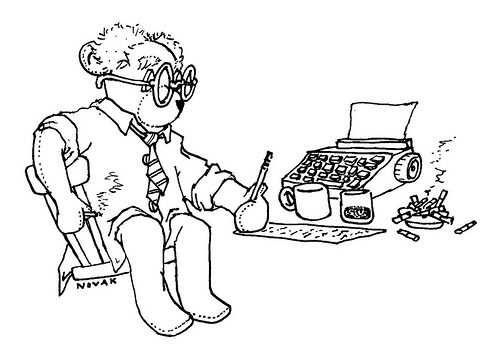
From Shrinking Solid to Expanding Gas: The Writing Life
They were rusted and unwieldy, heavy like useful things just aren’t anymore. Carved shakily into the left blade of my father’s scissors it read in magic: COPY BOY.
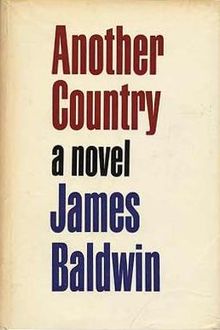
The Last Book I Loved: Another Country
The beauty in Another Country is that it permits a reader to at once lament and celebrate the ways in which we use each other to further our own ideas of self.
FUNNY WOMEN #13: Ask Jeeves
Hi, Kathleen. Thanks for writing. Perhaps I'll answer your question with a question of my own: Where the hell have you been?
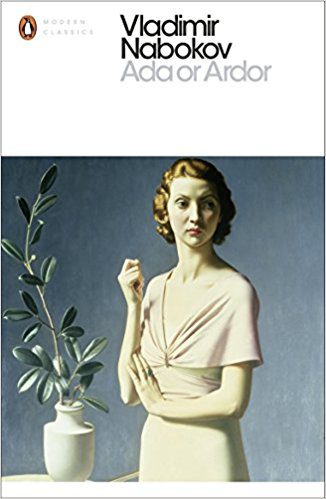
The Last Book I Loved: Ada, or Ardor: A Family Chronicle
The books I love are those tangled and overflowing: their magic is the product of the trust the author puts in his talent.
The First Rock ‘n Roll: A Scientific Fact
“Have you ever been to American wedding?/Where is the vodka?!” screams Eugene Hutz of gypsy punk band Gogol Bordello. In an interview on NPR’s Fresh Air, Hutz discusses the inspiration…
FUNNY WOMEN #7: In Retrospect, Dating That Speed Freak Wasn’t All That Bad, Comparatively
God, he was smart! He had a mind like a hummingbird, he had read every book there was to read, his tongue was sharp, he was funnier than anyone else at the party.
Thomas Bartlett
Pianist and New Yorker Thomas Bartlett was raised in rural Vermont by two devoted intellectuals. For the most part self-educated, save a few failed attempts at public high school and…
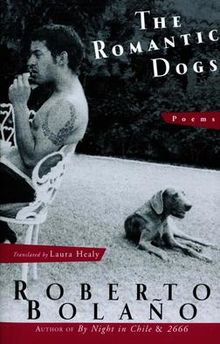
The Last Book I Loved: The Romantic Dogs
I always blanch when someone tells me—and always so assuredly, it seems—“ I just don’t really like poetry.” It’s more people, more otherwise avid readers than I would like to think.
“Publishing is often an extremely negative culture.”
Author and ex-soldier for the publishing world, former Executive Editor-in-Chief of Random House and fiction editor of The New Yorker Daniel Menaker attempts to break down the industry’s struggle into…